Factory-Custom Shoulder Bags, Where Eco-Consciousness Meets Daily Practicality
Dear B2B Partners,
Welcome to ECO-ZY — your trusted factory-direct manufacturer for custom shoulder bags, tailored for enterprises, retailers, and brands. We blend sustainability, functionality, and brand alignment, offering end-to-end customization from concept to bulk delivery.
Sustainability is our foundation: we use eco-materials like recycled nylon (from plastic bottles), organic cotton, and non-toxic dyes. Our factory adopts lean production to cut waste, ensuring every bag is durable and planet-friendly.
You can customize for your needs: pick sizes (slim for commutes, roomy for daily use), add functional details (padded phone pockets, water-resistant coatings), and align with your brand (logo embossing, brand-color matching). We offer fast sampling (3–7 days), strict quality checks, and flexible delivery.
Contact our B2B consultant, browse cases, or request samples — let’s create shoulder bags that serve your audience and reflect your sustainable values.
— The ECO-ZY Factory Customization Team
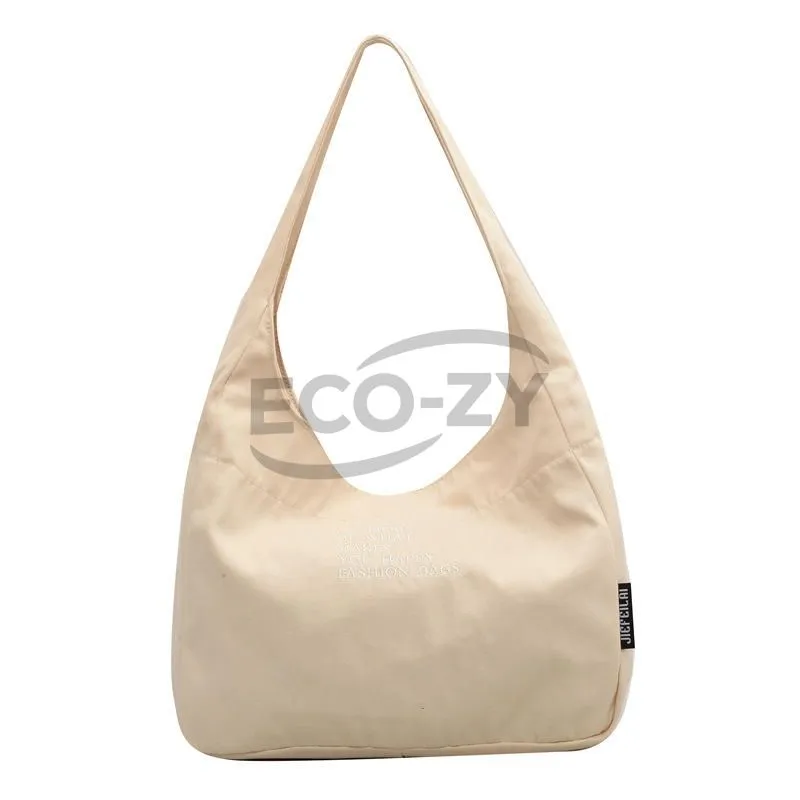
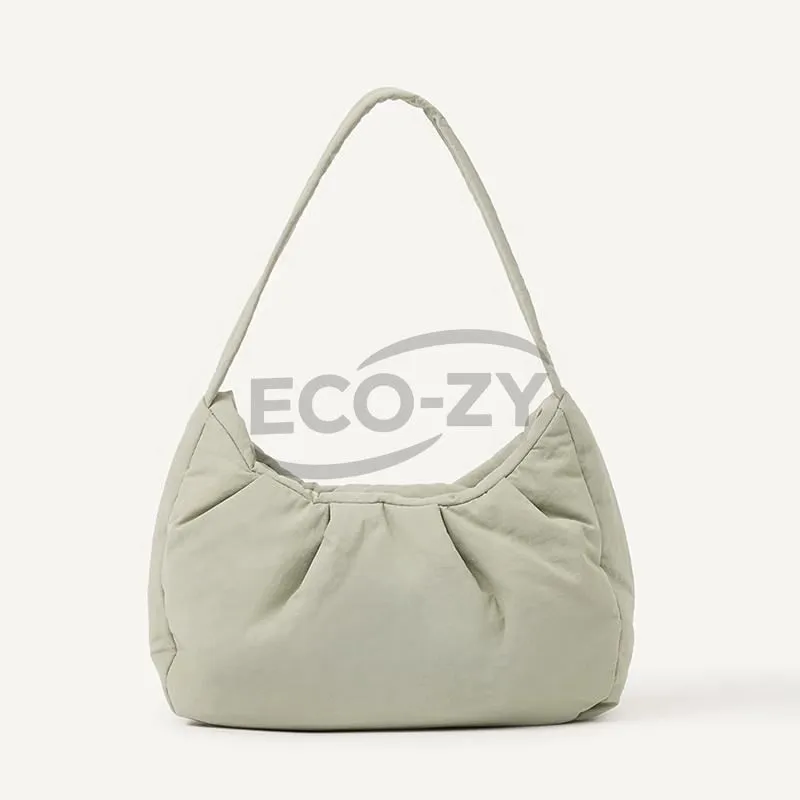
Display of various Shoulder Bag styles
embroidery logo shoulder bag
heat transfer printing shoulder bag
Jeans fabric shoulder bag
recycle fabric shoulder bag
silk printing logo shoulder bag
Customization & Service Commitment
Shoulder Bag Customization & Service Commitment: Your Go-To Partner for Stylish, Functional Designs
As a professional shoulder bag manufacturer with 10+ years of expertise, we specialize in creating custom shoulder bags tailored to diverse lifestyles and brand needs—whether for daily commuters (urban travel), fashion brands (trendy collections), corporate users (business essentials), or outdoor enthusiasts (lightweight carry). Our core focus is merging wear comfort (ergonomic straps, weight distribution), practical functionality (smart compartments, durable materials), and brand identity (custom logos, color matching), backed by strict service commitments to ensure a seamless partnership.
Here’s how we deliver for your shoulder bag project:
1. Free Sample & 3D Product Rendering: Preview Comfort & Style Before Production
We know shoulder bags need to balance aesthetics with daily usability—so we eliminate guesswork with two risk-free guarantees to refine your design:
Free Physical Samples: Receive a custom shoulder bag sample within 3 business days to test critical details:
Comfort & Durability: Evaluate shoulder strap performance (adjustable length, padded design for 4+ hours of wear without strain) and material quality (e.g., scratch-resistant vegan leather, water-resistant nylon that repels light rain, canvas with 5,000+ rub resistance).
Functional Design: Verify compartment layout (e.g., dedicated phone pocket, zippered coin pouch, A4 document slot) and usability (smooth magnetic closures, easy-access side pockets, lightweight structure ≤500g for daily carry).
Brand Alignment: Check logo customization (embossed, silk-screened, embroidered, or metal-plated) and color accuracy (Pantone-matched to your brand palette). We offer up to 3 free revisions to adjust strap width, logo placement, or pocket size—no extra cost.
Hyper-Realistic 3D Rendering: Our design team uses CAD software to create lifelike previews of your shoulder bag. See how your brand logo (positioned on the front flap or strap), corporate colors (e.g., neutral tones for business, bold hues for fashion), and unique features (detachable coin purse, RFID-blocking card slot) will look on the final product. This cuts design approval time by 45% and ensures the bag aligns with your target users’ needs.
2. Full-Lifecycle Service: From Style Selection to Doorstep Delivery
You only need to choose a base shoulder bag style (e.g., crossbody shoulder bag, hobo style, structured business shoulder bag, casual canvas style) — we handle every step from design to delivery with a standardized 7-stage workflow:
Needs Consultation: Our sales consultants (with 5+ years in bag accessory design) dig into your requirements: target users (e.g., 25-35-year-old urban commuters, luxury fashion shoppers), usage scenarios (e.g., daily work, weekend outings), functional needs (e.g., anti-theft zippers, laptop-compatible compartments), order volume (minimum 100 units for custom projects), and budget.
Custom Design: Designers integrate your brand elements and practical demands—e.g., adding a hidden anti-theft pocket for valuables, a removable shoulder pad for extra comfort, or a branded interior lining. They also align with global trends (e.g., “minimalist structured shoulder bags for 2024,” “sustainable materials for eco-conscious brands”).
Material Sourcing: We partner with 20+ certified suppliers to source premium, safe materials:
Outer fabrics: Vegan leather ( cruelty-free, 3-year wear guarantee), recycled nylon (GRS certified), canvas (OEKO-TEX-certified), or waterproof polyester.
Hardware: Rust-proof zippers (YKK brand), reinforced buckles, and logo-engraved metal D-rings (nickel-free for skin safety).
Linings: Soft microfiber or recycled cotton (prevents scratches on phones/keys).
All materials meet EU REACH and US CPSIA safety standards.
Sample Development: Produce and refine samples based on your feedback—adjust everything from strap length to compartment depth until you’re 100% satisfied.
Mass Production: Use automated cutting machines (±0.3mm precision) for consistent material pieces, and skilled workers for stitching (14 stitches per inch for durability). We optimize for comfort: e.g., reinforcing strap attachments to avoid tearing under 3kg weight (typical daily carry load).
Quality Inspection: 4-stage testing to guarantee comfort, durability, and brand consistency:
Comfort test: Evaluate strap padding (no pressure points after 4-hour wear) and weight distribution.
Durability test: Check zipper smoothness (1,000 cycles), strap strength (holds 5kg without stretching), and fabric abrasion (5,000 rubs with no fraying).
Logo test: Ensure clarity (no smudging, even embossing) and color fastness (no fading after 30 washes for canvas).
Random sampling: 15% of orders undergo additional checks (e.g., water resistance test for nylon bags).
Logistics & Delivery: Partner with DHL, FedEx, and local couriers for global shipping. We offer flexible packaging (e.g., branded dust bags for fashion lines, bulk cartons for corporate orders) and on-time delivery—98% of orders arrive before your launch date, even for rush projects (e.g., 2-week turnaround for 300 casual shoulder bags).
3. Expert Team: The Backbone of Premium Shoulder Bag Customization
Our team combines technical precision, design creativity, and user-centric thinking to craft shoulder bags that resonate with your audience:
Engineers: Specialize in shoulder bag comfort and structural durability—they calculate strap width for optimal weight distribution (e.g., 3cm straps for 2-3kg carry), design reinforced stress points (strap attachments, zipper edges), and test material compatibility (e.g., vegan leather + metal hardware to avoid color transfer). They also ensure compliance with ergonomic standards, so the bag feels comfortable even with daily use.
Designers: Bring 4+ years of shoulder bag design experience, staying updated on user needs (e.g., “commuters need quick-access phone pockets”) and fashion trends (e.g., “rounded hobo styles for casual brands, sharp structured designs for business”). They balance brand aesthetics with functionality—never prioritizing logo size over usability.
Sales Consultants: Act as your dedicated partners, available 24/7 via email, WhatsApp, and WeChat. They offer personalized solutions: e.g., suggesting waterproof nylon for outdoor-focused brands, vegan leather for luxury lines, or RFID-blocking pockets for travel users. They also share market insights (e.g., “shoulder bags with adjustable straps have 35% higher user satisfaction”).
Production Team: Comprise skilled professionals trained in specialized shoulder bag manufacturing—from precision stitching to hardware installation. They excel at details that matter: e.g., ensuring strap adjusters work smoothly, or logo embroidery stays aligned across hundreds of units. Their focus on consistency guarantees every bag meets your quality standards.
4. Advanced Capabilities: Comfort & Quality Built Into Every Step
We invest in state-of-the-art technology to ensure your custom shoulder bags meet high standards of comfort, durability, and style:
Production Capabilities:
Automated cutting: Uses laser or die-cutting technology for clean, consistent fabric pieces—critical for structured shoulder bags that hold their shape.
Precision sewing: Supports variable stitch counts (8 stitches per inch) to match material type (e.g., finer stitches for vegan leather, thicker stitches for canvas).
Custom hardware integration: In-house installation of logo-engraved zippers, buckles, and D-rings—ensuring brand consistency across every unit.
Ergonomic testing stations: Check strap comfort and weight distribution during production, not just post-production.
Testing Capabilities:
In-house lab with specialized equipment: Conducts fabric abrasion tests (5,000 rubs), zipper durability tests (1,000 cycles), strap load tests (5kg for 24 hours), and water resistance tests (ISO 4920 for nylon/polyester bags). All products meet international quality standards for bag accessories.
Packaging Capabilities:
Custom packaging solutions: Branded dust bags (for fashion shoulder bags), eco-friendly boxes (recycled cardboard) with foam inserts (to protect structured designs), and bulk packaging for corporate orders. We also offer gift-ready options (e.g., tissue-wrapped bags in branded boxes) for retail launches.
Why Partner With Us for Your Shoulder Bag Customization?
Proven Expertise: We’ve served 400+ clients worldwide—including fashion brands (e.g., custom vegan leather shoulder bags for a sustainable label), corporate clients (e.g., branded business shoulder bags for a finance firm), and outdoor brands (e.g., waterproof nylon shoulder bags for a hiking gear company). Our client satisfaction rate is 93%.
Cost-Effective Bulk Solutions: Orders of 500+ units enjoy 30%+ cost savings, with transparent pricing (no hidden fees for logo customization or material upgrades).
User-Centric Design: We prioritize comfort and functionality as much as brand identity—ensuring your shoulder bags aren’t just stylish, but also loved by users for daily use (boosting long-term brand exposure).
Ready to create shoulder bags that blend style, comfort, and brand value? Contact our sales team today for a free 3D rendering and sample quote!
Fabrics Used To Make Shoulder Bag
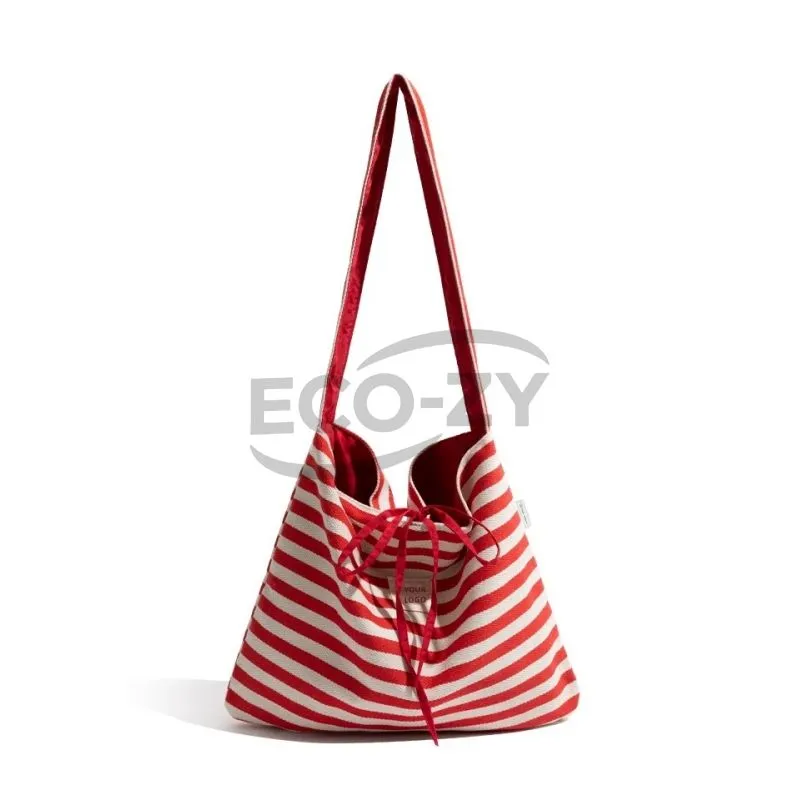
01 Recycled Fabric in Shoulder Bag Applications
Recycled Fabric, most commonly sourced from rPET (recycled PET plastic bottles), is rapidly becoming the material of choice for shoulder bags, driven by the demand for sustainability, light weight, and a contemporary, responsible aesthetic. It offers performance entirely comparable to virgin polyester or nylon, ensuring the shoulder bag maintains excellent durability, tensile strength, and color vibrancy for reliable daily wear.
rPET is widely used for the exterior shell and internal lining of everyday carry bags, functional totes, and fashion-forward shoulder bags. The material's ability to be easily coated for water resistance protects contents from rain and spills. By incorporating recycled fabric, brands meet consumer demand for ethical products, giving the shoulder bag a strong environmental narrative about diverting plastic waste without compromising the lightweight feel and necessary robustness for everyday carrying.
Polyester Oxford(210D, 420D, 600D, 840D, 1000D)
02 Polyester Oxford Fabric in Shoulder Bag Applications
Polyester Oxford fabric is the market standard for functional shoulder bags, valued for its exceptional versatility, reliable durability, and excellent cost-to-performance ratio. Identified by its recognizable basket weave, it offers a sturdy and consistent exterior ideal for high-volume production and robust daily use.
Polyester Oxford is widely used for everyday shoulder totes, casual messenger bags, and budget-friendly work bags. The material is inherently resistant to stretching and is often treated with a thin PU or PVC coating to achieve superior waterproofing and stain resistance, which is essential for bags constantly exposed to the elements during daily commutes. This fabric provides a lightweight, easy-to-maintain, and budget-conscious shell that successfully balances the need for resilience with efficient manufacturing.
There are several common types:(210D, 420D, 600D, 840D, 1000D)
Nylon Oxford(210D, 420D, 500D, 840D, 1000D, 1680D)
03 Nylon Oxford Fabric in Shoulder Bag Applications
Nylon Oxford fabric is often selected for premium and high-performance shoulder bags, prized for its exceptional strength-to-weight ratio and superior abrasion resistance over standard polyester. While it features the familiar basket weave, the inherent toughness of the nylon fibers provides a lighter yet significantly more resilient exterior, which is crucial for shoulder bags that endure constant friction and heavy loads.
This material is utilized in technical commuter bags, durable travel messengers, and luxury sportswear crossbodies that demand long-term reliability. Nylon is typically treated with a high-grade PU or water-resistant coating to achieve excellent waterproofing and tear resistance, protecting valuable contents from the elements. Although Nylon Oxford is more expensive than its polyester equivalent, it justifies the cost by offering a lighter, tougher, and more sophisticated shell for top-tier collections.
There are several common types:(210D, 420D, 500D, 840D, 1000D, 1680D)
Neoprene (3mm–8mm thickness, waterproof + thermal insulation)
04 Neoprene Fabric in Backpack Applications
Neoprene (also known as polychloroprene) is a durable synthetic rubber famed for its exceptional flexibility, waterproofing, and protective qualities. Although rarely used for a backpack's main body, it is an ideal material for padding and specialized compartments.
Its closed-cell foam structure provides excellent shock absorption and insulation, making it the top choice for protective sleeves within a bag, such as laptop and tablet compartments or camera inserts. Furthermore, Neoprene’s natural water resistance and elasticity make it perfect for external water bottle pockets or small accessories pouches where a snug fit and moisture protection are required. It gives technical and specialty bags a soft, cushioned, and modern tactile finish.
There are several common types:(3mm–8mm thickness ,Water-Resistant and Insulated)
Canvas(12oz, 14oz, 16oz)
05 Canvas Fabric in Shoulder Bag Applications
Canvas fabric, typically woven from cotton, is a classic and reliable material for shoulder bags, highly favored for its natural texture, rugged durability, and heritage or casual aesthetic. It provides a robust, yet comfortable feel against the body, making it ideal for everyday shoulder totes, vintage-style messenger bags, and relaxed urban carry bags.
The fabric's strength is directly related to its weight, measured in ounces (oz), with heavier canvas providing superior structure and longevity for carrying heavier items. While raw canvas is breathable, it is naturally absorbent, meaning it must be treated with wax or water-repellent coatings to achieve modern functionality. This treatment creates the highly sought-after 'waxed canvas' finish, which dramatically improves waterproofing and develops a unique, rugged patina that enhances the bag's classic appeal over time.
There are several common types: (12oz, 14oz, 16oz)
06 Genuine Leather in Shoulder Bag Applications
Genuine Leather refers to a wide range of real animal hide products (often corrected grain or split leather), making it a popular and highly accessible choice for mid-range to premium shoulder bags. It is valued for its authentic natural texture, strong structure, and the perception of luxury and longevity at a more approachable price point than full-grain leather.
Genuine Leather offers excellent rigidity and durability for bags that must maintain their professional shape, such as messenger bags, structured totes, and everyday satchels. It handles the friction and stress of daily shoulder carry well, and like all real leather, it develops a unique patina with age. This material provides the sought-after look and feel of a classic leather bag, requiring only standard care while offering a sturdy and sophisticated shell for daily use.
07 PU Leather in Shoulder Bag Applications
PU Leather (Polyurethane) is the most widely adopted synthetic material for shoulder bags, highly valued for its versatility, light weight, and excellent resistance to moisture and stains. It serves as a practical, low-maintenance, and cost-effective alternative to genuine leather, instantly providing a polished, modern, or trendy look.
PU is primarily used for the exterior shell of fashion shoulder bags, casual totes, and functional commuter satchels. Its surface is inherently waterproof and stain-resistant, making the bag easy to wipe clean after daily use—a significant benefit for an item that is frequently handled and exposed to the elements. Offering consistent texture and color across large production runs, PU is the ideal vegan-friendly choice for brands seeking a durable, practical, and stylish material without the cost or maintenance requirements of animal hide.
08 PVC in Shoulder Bag Applications
PVC (Polyvinyl Chloride) is used in the shoulder bag market primarily for its extreme waterproofing, low production cost, and unique ability to be manufactured in rigid, highly glossy, or transparent forms. It is the standard material for specialized items like clear stadium bags, low-cost promotional items, and bold fashion statements that demand a shiny or see-through aesthetic.
PVC's thick plastic composition offers superior stain resistance and is virtually 100% waterproof, making the bag easy to wipe clean after spills or exposure to rain—a major advantage for an outdoor or event accessory. However, compared to modern PU or coated fabrics, PVC is generally heavier, stiffer, and less flexible, which can restrict design options and may lead to cracking in cold weather. Due to environmental concerns, many mainstream fashion brands are phasing out PVC in favor of more sustainable synthetic alternatives.
09 Cotton Fabric in Shoulder Bag Applications
Cotton Fabric, distinct from heavy canvas weaves, refers to lighter-weight materials (like twill or sheeting) primarily valued in shoulder bags for its soft, natural feel, casual aesthetic, and excellent capacity for vibrant prints and customization. It is typically chosen for bags where comfort and visual design are more important than heavy-duty ruggedness.
Due to its soft and highly breathable nature, cotton fabric is popular for fashion totes, casual sling bags, and personalized, print-heavy accessories. When used on the exterior, it must be combined with a strong internal lining for structure, as it lacks the inherent tensile strength of synthetics. Furthermore, as raw cotton is highly absorbent, these bags often require a water-repellent spray treatment or must be reserved for dry conditions, as they offer minimal protection against rain or spills.
10 Mesh Fabric in Shoulder Bag Applications
Mesh Fabric is a lightweight, open-weave or knitted material used in shoulder bag design primarily for its functional benefits: maximum ventilation, visual convenience, and extremely light weight. It is rarely used for the main structural body but is a key element in athletic, technical, or highly organized casual bags.
Mesh maximizes airflow and drainage, making it perfect for external side pockets designed to hold items like water bottles or umbrellas, preventing moisture from transferring to the bag's main compartment. It is also widely utilized for internal organizational pockets where quick visibility of contents (such as keys, phone, or wallet) is desired, or as padding on the back panel and strap to improve airflow and user comfort during extended wear. Mesh adds minimal bulk while offering a practical, quick-drying, and aesthetically modern component to contemporary shoulder bag designs.
Free Pantone Color Choice
As you explore our wide range of fabric pantone color options for your custom backpack, we’ve created a comprehensive fabric color chart to help you visualize and select the perfect hues for your project
1. Color Categories: Our fabric color chart is organized into distinct color categories, making it easy for you to navigate and find the colors that best suit your preferences. Whether you’re looking for vibrant shades, earthy tones, or classic neutrals, we have a variety of options to choose from.
2. Color Swatches: Each color category features a selection of color swatches, showcasing the available hues within that particular color family. From bold and bright to subtle and subdued, our color swatches allow you to see the full spectrum of colors available for your custom backpack&rucksack.
3. Color Codes: Next to each color swatch, you’ll find color codes that correspond to specific shades. These color codes serve as a reference point when placing your order, ensuring that you receive the exact colors you’ve selected for your portable backpack.
4. Customization Options: In addition to our standard fabric color chart, we also offer custom color options for customers who desire a truly unique and personalized look for their backpack. Simply provide us with your desired color specifications, and our team will work with you to create custom backpack that match your vision.
5. Digital Rendering: If you’re having trouble visualizing how a particular color will look on your backpack, our digital rendering services can provide a preview of your design before production begins. This allows you to make any necessary adjustments to colors or design elements to ensure your printed backpack turn out exactly as you envision.
Product features and details display
Silk Printing Logo Lining
Logo/printing process selection
01 Silk Screen Printing
Silk Screen Printing is the most popular decoration method for bags because it delivers exceptionally vibrant and opaque colors that hold up well against wear and washing, making it the most cost-effective choice for large production runs. However, its major drawbacks are technical: it cannot handle fine details, complex color gradients, or photographic imagery, and the need for a separate screen for each color makes multi-colored designs significantly more complex and expensive. Furthermore, the thick layer of ink can sometimes leave the printed area feeling slightly hard or stiff on the bag material.
02 Heat Transfer Printing
Silk Screen Printing is the most popular decoration method for bags because it delivers exceptionally vibrant and opaque colors that hold up well against wear and washing, making it the most cost-effective choice for large production runs. However, its major drawbacks are technical: it cannot handle fine details, complex color gradients, or photographic imagery, and the need for a separate screen for each color makes multi-colored designs significantly more complex and expensive. Furthermore, the thick layer of ink can sometimes leave the printed area feeling slightly hard or stiff on the bag material.
03 Woven Labels
Woven Labels are a popular and highly effective branding choice for bags, immediately conveying a high-end, professional, and premium image that greatly enhances perceived value. They offer superior durability—often lasting longer than the bag itself—and provide excellent detail and texture for logos and text, particularly compared to simple screen printing. However, woven labels are more expensive than printed labels due to the necessary setup costs (digitizing the artwork) and generally require high minimum order quantities (MOQs), making them less practical for small production runs. Additionally, the color range is limited by available thread colors, making them unsuitable for complex photographic images or exact color matching.
04 Stamped Leather Logos
Stamped Leather Logos (often referred to as debossing or hot stamping) are used on bags to convey a sophisticated, high-end, and premium brand aesthetic. The process involves pressing a custom-made metal mold into a leather or PU patch using heat, creating a permanent, deeply defined logo that is exceptionally durable and will never rub off. Debossing is valued for its subtle, monochromatic look, while hot stamping adds a metallic foil color. However, this method requires a significant initial investment in creating the metal tooling (the mold). It is not suitable for very fine lines or extremely small text, and the durability of foil stamping (adding color) is lower than simple debossing, as the foil can eventually wear down.
05 Embroidery Logos
Embroidery Logos are a highly popular and effective choice for bags, immediately conveying a premium, handcrafted, and textured aesthetic that significantly increases the perceived value of the product. This method is exceptionally durable—the thread colors will never fade or crack—and works well for small, clean logos and text. However, embroidery requires a high initial setup cost for digitizing the logo file, making it more expensive than simple screen printing, especially on large designs. Furthermore, the needle size limits the level of fine detail and tiny text that can be accurately rendered, and the stitching process can sometimes necessitate a stiff backing or stabilizer, making the underlying fabric less flexible than other methods.
06 Metal Logos
Metal Logos and custom metal hardware are the pinnacle of branding for bags, immediately conveying the highest perceived value and a true luxury, premium aesthetic. They are exceptionally durable, permanent, and offer a unique three-dimensional and polished finish that cannot be replicated by printing or embroidery. However, this is also the most expensive branding option, requiring a significant initial investment in creating the custom mold or tooling, which involves the longest lead time for production setup. Furthermore, metal logos add noticeable weight to the bag, and the artwork must be simplified to accommodate the material limitations of casting and stamping.
Certification
Quality Inspection
Cooperating Brands
Pricing and Availability
Cheap Wholesale Backpack In Stock (meet different customer budgets)
Custom shoulder bag FAQ
Q1: How to choose the size of a shoulder bag based on height and body type?
A: The size of a shoulder bag should match your height and body type to avoid proportion imbalance:
Petite build (height < 160cm): Prioritize small bags with a width of 25-30cm and height of 20-25cm, such as mini shoulder bags or underarm bags. Avoid large bags that may overwhelm your frame.
Medium build (height 160-175cm): Regular-sized bags (width 30-35cm, height 25-30cm) work best, e.g., commuter shoulder bags or tote-style shoulder bags. They balance practicality and proportion.
Tall build (height > 175cm): Larger bags (width 35-40cm, height 30-35cm) are suitable, such as large-capacity travel shoulder bags or canvas totes. Avoid small bags that may look awkward.
Q2: What are the pros and cons of different shoulder bag materials? How to choose?
A: The characteristics of common materials are compared below; select based on your usage scenario:
|
Material
|
Advantages
|
Disadvantages
|
Suitable Scenarios
|
|
Genuine Leather
|
High texture, durable (lasts years with proper care), breathable
|
Expensive, vulnerable to water/scratches, requires regular maintenance
|
Commuting, formal occasions, long-term use
|
|
Faux Leather (PU/PVC)
|
Affordable, diverse styles, waterproof and easy to clean
|
Poor breathability, prone to aging and cracking (1-2 year lifespan)
|
Trendy matching, short-term use
|
|
Canvas
|
Lightweight, wear-resistant, cost-effective, machine-washable
|
Easy to get dirty, poor water resistance, casual texture
|
Daily leisure, student use, short trips
|
|
Nylon
|
Waterproof, lightweight, durable (scratch and impact resistant)
|
Sporty texture, easy to attract lint
|
Outdoor activities, rainy days, sports
|
|
Leather Patchwork
|
Combines texture and design, improved durability
|
Mid-range price, cleaning requires material differentiation
|
Commuting, fashion matching
|
Q3: What is the appropriate strap length for a shoulder bag? How to adjust it for comfort?
A: The strap length should be adjusted based on your "carrying style" and "body shape." The core principle is to keep the bag naturally fitting your waist or hips, avoiding slipping or tightness:
Regular shoulder carry (crossed to the side of the waist): The strap length is recommended to be 1/4 to 1/5 of your height (e.g., 40-45cm for a 165cm height). The bottom of the bag should be 3-5cm from your hip bone.
Underarm bag (short strap): The strap only needs to hold the bag under your armpit, with the bag fitting tightly below your ribs to prevent shaking.
Adjustment tip: Prioritize straps with "metal adjusters" or "multi-position eyelets." Leave 1-2 fingers of slack after adjustment to reduce shoulder pressure.
Q4: What functional features should a commuter shoulder bag have?
A: A commuter shoulder bag needs to balance "practicality" and "comfort." Focus on these features:
Layered storage: At least 1 main compartment (for laptops/documents), 1-2 side pockets (for water bottles/umbrellas), and 1 inner patch pocket (for phones/keys).
Load-bearing design: Strap width ≥ 3cm (reduces shoulder pressure), and the bag bottom has anti-slip pads or reinforced stitching (prevents deformation).
Detail optimization: Magnetic/zipper closure (anti-theft), padded laptop compartment (protects electronic devices), and retractable straps (can be used as a handbag temporarily).
Q5: Will long-term one-shoulder carrying cause uneven shoulders? How to avoid it?
A: Long-term one-sided carrying (especially with a weight > 3kg) can cause shoulder and neck muscle imbalance, potentially leading to uneven shoulders or back pain. To avoid this:
Control weight: The load of a shoulder bag should not exceed 5% of your body weight (e.g., a maximum of 2.5kg for a 50kg person). Avoid overloading.
Alternate carrying: Switch to the other shoulder every 30-60 minutes, or occasionally use it as a handbag/crossbody bag (if the strap allows).
Supportive posture: Keep your chest up and head straight while walking, and keep the bag close to your back to reduce excessive shoulder strain.
Q6: How to clean and maintain shoulder bags of different materials?
A: Maintain bags by material type to extend their lifespan:
Genuine leather bags:
Daily care: Wipe off dust with a dry, soft cloth; avoid contact with rain and oil.
Cleaning: Dab a small amount of neutral soapy water (e.g., baby laundry detergent) to gently wipe stains, then immediately blot dry with a dry cloth.
Maintenance: Apply leather care oil every 3-6 months (avoid seams and metal parts). Stuff paper inside to prevent deformation during storage, and cover with a dust bag.
Faux leather (PU/PVC) bags:
Cleaning: Wipe stains directly with a damp cloth; use a small amount of alcohol to gently wipe stubborn stains.
Note: Avoid direct sunlight (causes cracking) and keep away from high temperatures (e.g., heaters, air conditioner vents).
Canvas/nylon bags:
Cleaning: Machine washable (place in a laundry bag, use neutral detergent, water temperature < 30℃) or hand wash, then air dry naturally (avoid direct sunlight to prevent fading).
Maintenance: Remove lint from nylon bags with a lint roller; prevent canvas bags from staying damp for a long time (avoids mildew).
Q7: How to match a shoulder bag with different clothing styles?
A: Choose the bag’s "style, material, and color" based on your clothing style for harmony:
Casual style (T-shirts + jeans/sweatpants): Opt for simple canvas or nylon bags in colors like black, white, gray, or bright shades (e.g., neon green, Klein blue), such as sports shoulder bags or crossbody mini bags.
Commuter style (blazers/shirts + trousers/midi skirts): Select structured genuine leather or PU bags in colors like black, brown, or off-white, such as underarm bags or tote-style shoulder bags. Avoid overly fancy designs.
Vintage style (floral dresses/velvet jackets): Choose retro-style bags with leather patchwork or metal buckle details in colors like caramel, burgundy, or dark green, such as messenger-style shoulder bags.
Edgy style (crop tops + high-waisted pants/mini skirts): Go for mini underarm bags or chain shoulder bags made of glossy PU or metal chains in colors like silver, pink, or black to emphasize a sleek look.
Q8: Is a shoulder bag suitable for travel? What type should I choose?
A: Shoulder bags are suitable for travel (as personal bags). Two recommended types:
Short trips (1-3 days): Choose a waterproof nylon shoulder bag with a "large main compartment + multiple layers" to hold passports, phones, power banks, sunglasses, etc. The strap should be adjustable for crossbody carrying (frees up hands).
Long trips (> 3 days): Select a "foldable canvas shoulder bag" (lightweight and space-saving). Use it as a "backup bag" for shopping hauls or as a small bag for short outings.
Q9. What payment terms and shipping options do you offer for international custom portfolio orders?
We provide secure payment terms and flexible shipping to meet global needs:
Payment terms:
T/T (Telegraphic Transfer): 30% advance payment (to start production) + 70% balance (after QC approval, before shipment).
L/C (Letter of Credit): Accepted for orders over $30,000 (via major international banks like HSBC or Bank of China).
Shipping options:
Sea Freight Air Freight Express


